The appearance of wisdom
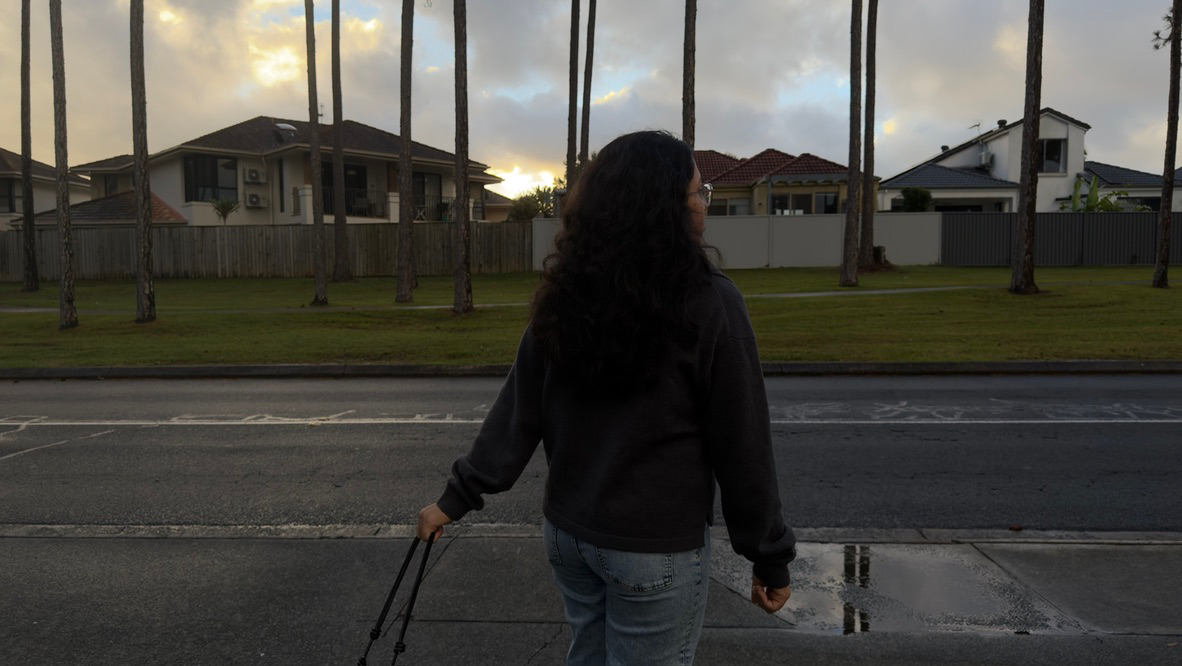 A, who waited up.
The Greeks had one word, pharmakon, for both a medicine and a poison. The cure and the thing that kills you, named the same. Plato uses it in the Phaedrus, in a story Socrates says he heard secondhand, when he gets to the invention of writing. An old Egyptian god named Theuth invented it, along with number, geometry, astronomy, and the games of dice and draughts. He took his inventions to the king, Thamus, and laid them out to be judged. The king had a use or a worry for each one. Writing, Theuth said, would make the Egyptians wiser and improve their memory. He offered it as a cure. The king heard the poison in it. You are the father of letters, Thamus said, so you credit them with the opposite of what they do. Writing will not improve memory. It will replace it. People will stop remembering and read it off the page instead. You have made a recipe for reminding, not for memory. And it gives your pupils the appearance of wisdom, not the thing itself. They will read a great deal and be taught nothing, and think themselves learned while knowing almost nothing.1
I kept thinking about that story all week, because the week kept proving the king's point. So did a paper of mine that was accepted in the middle of it. Both ran on the same trick: how easily the clean version of a thing gets mistaken for the thing itself.
By Friday I had half a dozen things going at once. The skills-assessment documents were in. A place for July was booked. A stack of things we had spent days making by hand was finally out in the world. A problem at work had blown open. And a few people I like were still waiting on replies I owed them.
None of it was bad news. That is what I keep getting wrong about weeks like this. Nothing has to go wrong for them to flatten you. They just pile up until the pile is the problem. It is the kind of week I keep swearing off and keep signing up for. A fever I did not see coming took most of a weekend, and I worked from home through it, short on sleep.
Thursday was the day it went sideways. I had taken the morning off for something of my own, with someone waiting on me and a deadline we had set. Then the problem at work blew up and the afternoon split in two. I spent part of it standing outside the bank with no signal on my phone, the one thing I needed it for, while the queue inside crawled and the person across town waited. One thumb on work messages, one eye on the clock, doing two jobs badly instead of one well. I was shaking a little, and could not quite tell whether it was the cold or the nerves. My head was not sure; the body seemed to know before I did. The errand was part of something bigger I had started and could not steer, which I will keep to myself, and it left a small damage I could not undo or explain. By evening I was back at my desk, still no closer to the bottom of the work problem. I wanted to skip Friday and could not, so I went and carried it with me. The week ended in a shape I had not planned, and it is not done. There is more to rethink, and more work owed, before it is.
None of that was a plan going wrong. It was a plan meeting the week. A year ago I would have scrapped it and started fresh somewhere else; that is what I am good at, walking out of a room that stops fitting and building another down the hall. What is different now is mostly one person. A waited up on Thursday, and when I came in late and no use to anyone, made tea and did not ask me to explain. I used to take a night like that as a sign to go find something simpler. Now it is the reason to stay. The week keeps handing me the same lesson, that one thing done well beats six things half-done, and this time I am not walking out. I am going to stay with the mess and fix it, which is slower and harder and newer for me.
All of that was the plan slipping in plain sight: a clean idea at the start of the week, a mess by the end. The paper is about the same slip somewhere you would least expect to find it, inside a machine built to be exact. It is open access now if you want the long version. Here is the short one, without the jargon.
When you give one of these learning machines a physical thing, a material, a structure, a medical scan, you can never give it the thing itself. You turn it into a picture or a list of numbers first. Every step of that is a choice someone made. Which property do you show? Where do you crop? How hard do you push the greys to black and white? What counts as one category and what as another? Each choice throws away a little of the real thing before the machine sees anything. Most of the time nobody writes them down. They go under "details", and then the machine's answer gets read as if it came from the material, when it came from one way of drawing the material.
The paper sorts these into four kinds: what you show, how you frame it, what you let change, and where you draw the line between categories.2 Then it does something I had not seen done before. It goes back through the published work and counts how often anyone records these decisions. Across twenty-eight studies, every one reported its settings, and only six ever tested them against an alternative. The choice gets made once, in passing, then carried for years as if it were the only option.
I ran the framework on a model that sorts those lattices from last week, the ones that grow wider when you pull them, by how they buckle under load.3 Look at how much of each one gets thrown out before the model even starts. First, what to show: the strain in the material, not the stress or the movement. Then the greys of that strain are forced to black and white at one cut-off, and everything in between is lost. The image is cropped to the buckling region, so its size and place in the structure are lost too. What is left is shrunk to a small square of pixels, to keep the maths cheap. And instead of an expert naming the kinds of buckling, the machine groups the pictures by resemblance and those groups become the categories. Five forks, each taken once, and the model sees none of them.
On its own terms the model looked like a success: right about eighty-eight times in a hundred. Then you ask what it was scored against. The grouping step had cut the shapes into eight kinds where the physics has six. It split one real behaviour across two piles and missed two others completely, two of the actual ways these structures fail, invisible to the model meant to catch them. So the eighty-eight measured how well the model matched the machine's own grouping, not how the material behaves. It was right about one drawing of the question and silent on the question.
The paper is not out to blame anyone; several of those choices were fine. The point is that each one can be written on a single page, with what it kept and what it cost, and then tested instead of trusted. I went back and tested mine. Some held and some did not. The black-and-white cut-off was steady for a long stretch, then fell off a cliff. The eight categories turned out to be one defensible cut of several. None of that shows up in the accuracy score, which is the whole point.
If you work anywhere near this, the same hidden choices are in your field too: the scan cropped before the model reads it, the sentence split into words, the sound cut into slices of pitch. None of those are facts. They are choices, and each one sets what the machine can notice before it notices anything. The questions in the paper are there to be borrowed. Use them on your own data before you trust what it tells you back.
That is the king's warning, in my own life. The machine is very good at giving me a confident answer, and a confident answer is the easiest thing to mistake for understanding. More than once this year I have leaned on it and come away knowing less, not more. It did not teach me anything; it let me skip the part where you learn. The paper is partly me forcing myself to do the working.
Nearly two thousand years after Thamus, the same argument came round again. In 1492 a German abbot named Johannes Trithemius wrote a short book, In Praise of Scribes, telling his monks not to lay down their pens for the new printing press. Copying by hand, he said, kept the mind and the soul at work in a way the machine never could. Then he had it printed. He wanted the argument to spread, and by then the press was how things spread.4
I know the feeling, because I live the same contradiction at work. I write software, and more of it now happens next to one of these machines. It hands me code that runs, a fix that turns the test green, an answer that compiles first try, and a working answer is the easiest thing there is to mistake for understanding. The trouble is rarely that the code is wrong; often it is right. The trouble is shipping something I could not have written myself and could not fully explain, and calling that knowing how it works. Refusing the machine is not honest, and not really possible, any more than it was for Trithemius. But it will only ever carry the words. It will not do the copying by hand for me, the slow part where the thing actually lands in my head.
There is a third version of the warning, and it is the funniest. Borges tells it in a single paragraph, as a quotation from a travel book that never existed.5 An empire gets so good at mapmaking that each map has to be larger and more exact than the last, until the cartographers make the only perfectly faithful one: a map the size of the empire, laid over it point for point. It throws nothing away, and so it is useless. The next generation leaves it out in the desert to rot. The only picture that keeps the whole of a thing is the thing itself, and you cannot carry that around. Every map you can actually use has already given something up.
So it was the same gap three times in one week. The week took apart a plan I had been sure of, and a model of mine aced the wrong question. And the whole time there was me, taking the confident answer for the understanding. The clean version is never the whole of the thing. Some of it always belongs to the world, and that part was never yours to set.
Next week there is new work, and I want to take it one thing at a time. What I still owe from this one comes with me; I just do not have to carry all of it at once. The weight of how the week felt can stay behind. You cannot carry the whole of a week into the next, any more than the empire could carry its map. You keep the part light enough to move. This time it is a small one: that one thing done well beats six half-done. And you leave the rest out for the weather. That is enough to begin on.
See you next week.
Plato, Phaedrus, 274c-275b, the myth of Theuth, who brings the gift of writing to King Thamus of Egypt. Thamus warns that it will produce forgetfulness in the souls of those who learn it, and give them "the appearance of wisdom, not the reality." At 274e Theuth calls writing a pharmakon, a word meaning both remedy and poison, the ambiguity Derrida later built "Plato's Pharmacy" around. Greek and English at the Perseus Digital Library: http://www.perseus.tufts.edu/hopper/text?doc=Plat.+Phaedrus+274c; full Jowett translation at Project Gutenberg: https://www.gutenberg.org/files/1636/1636-h/1636-h.htm.↩
G. Singh and R. S. Dhari, "A Framework for Visual-Mathematical Literacy in Applied Machine Learning: Why Representation Choices Shape What Models Can Learn," Machine Learning: Engineering (2026, accepted manuscript online, open access CC BY 4.0), DOI https://doi.org/10.1088/3049-4761/ae7df3. The four decision families are encoding, spatial domain, augmentation, and label source; the framework pairs them with a ten-question audit protocol and a one-page representation datasheet. The review covers 28 applied-ML studies (2007-2025), of which only six systematically compared alternative representations. In the auxetic case study the documented choices included von Mises equivalent plastic strain as the field, a binary threshold at τ = 200, a region-of-interest crop, 64×64 resolution, and K-means labels at k = 8, reaching 88.08% accuracy against those labels while the underlying physics has six deformation modes, two of which went undetected.↩
The pipeline the case study audits is reported in G. Singh, R. S. Dhari and Z. Javanbakht, "Automated detection of deformation mechanisms in re-entrant honeycomb auxetics using machine learning," International Journal of Protective Structures 16, no. 4 (2025): 853-877 (published online 13 October 2024), DOI https://doi.org/10.1177/20414196241281069.↩
Johannes Trithemius, abbot of Sponheim, De Laude Scriptorum ("In Praise of Scribes"), c. 1492, a defence of hand-copying against the printing press, which he nonetheless had printed (Mainz, 1494). Trithemius elsewhere called printing a "marvellous" art and filled his abbey's library with printed books. Background and sources at the History of Information: https://www.historyofinformation.com/detail.php?id=337.↩
Jorge Luis Borges, "On Exactitude in Science" ("Del rigor en la ciencia"), 1946, a one-paragraph story presented as a quotation from a fictional source, "Suárez Miranda, Viajes de varones prudentes, Libro IV, Cap. XLV, Lérida, 1658." The conceit of a 1:1 map echoes an earlier passage in Lewis Carroll's Sylvie and Bruno Concluded (1893), and is the canonical illustration of the map-territory distinction later associated with Korzybski. Text at Wikipedia: https://en.wikipedia.org/wiki/On_Exactitude_in_Science.↩